
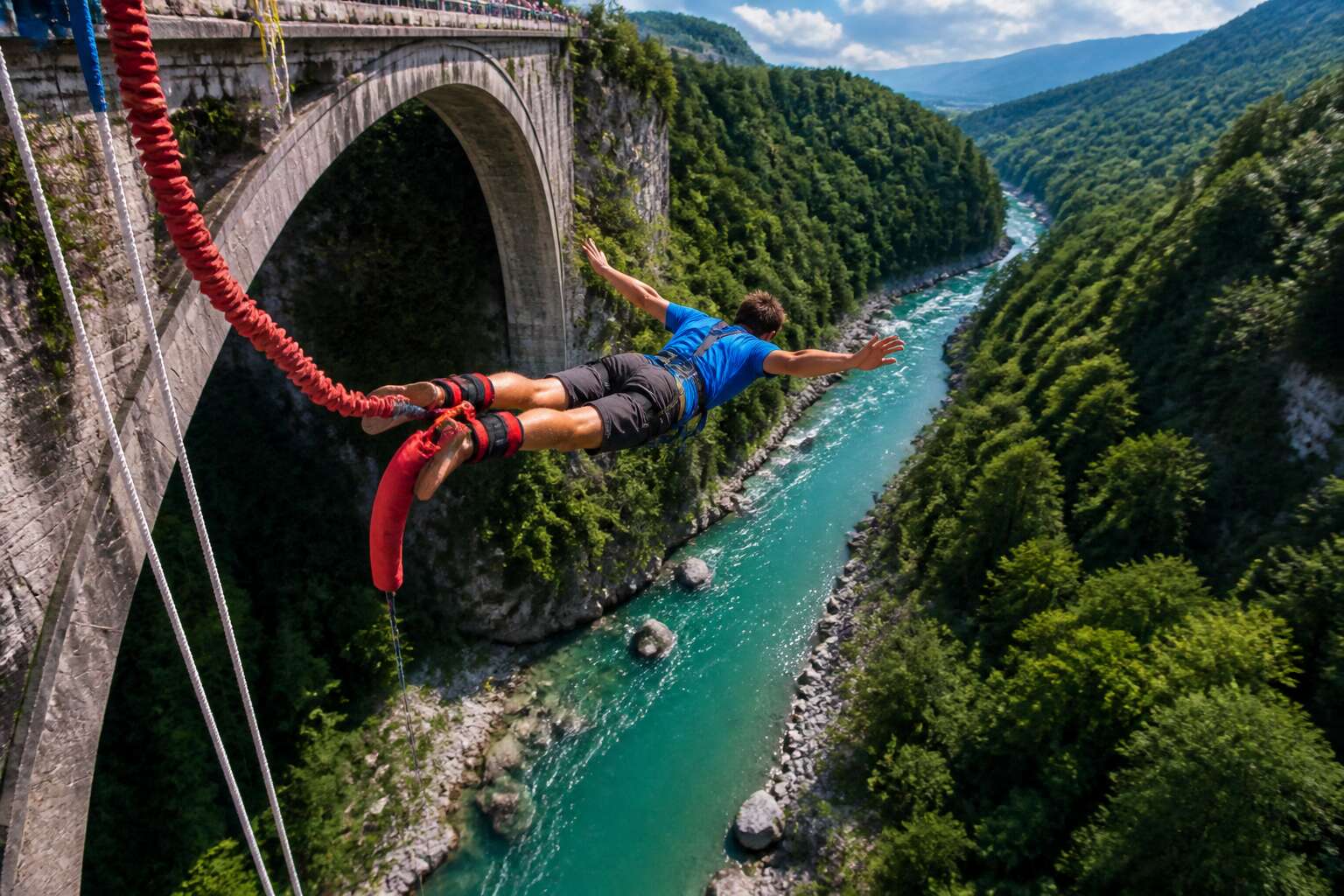
The Unique Appeal of Jumping from Man-Made Structures
Engineering Feats and Structural Integrity
The Forth Bridge, a UNESCO World Heritage site, sees over 200 trains cross its span daily AC. This is the stage where engineering meets a peculiar form of British nerve. We are drawn to the promise of a structure built to outlast us, offering a momentary defiance of gravity from its peak. The decision to leap is less about the void below and more about the quiet confidence in the rivets and steel above.
Choosing a site for bridge bungee jumping involves trusting decades of meticulous design. A bridge’s integrity is not a mystery; it is a matter of public record and routine inspection. The structure must endure constant dynamic loads, from the rumble of heavy vehicles to the torque of high winds.
Here is what separates a suitable venue from a reckless one:
– A proven load-bearing capacity that exceeds the demands of jumpers and equipment.
– A clearance that allows a full rebound without any contact with the water or land below.
– A maintenance schedule that prioritises the anchoring points specific to the jump.
The true thrill is a negotiation between human daring and civil engineering. You are not gambling on fate; you are betting on the British legacy of industrial precision. The shudder you feel as you step off is the bridge negotiating with your weight, a conversation you understand only through the tautness of the cord. This is the unique appeal of a man-made precipice; it is a controlled environment designed for the greatest possible thrill. The traffic above merely pauses for your descent, a brief, polite interruption to the daily routine.
The Psychological Contrast: Urban vs. Natural Drop Zones
The echo of a train rattles the steel beneath your feet as you peer over the edge. It is a strange sensation, standing on a man-made precipice that was designed for commuters, not daredevils. When you consider bridge bungee jumping from a Victorian structure, the urban environment dominates the experience; the city hums with the energy of a thousand daily lives, and the concrete pillars below offer a stark, unforgiving backdrop.
But what happens when you trade the skyline for a canyon? The psychological shift is immediate and profound. In nature, the silence is often louder than the city traffic. Here, you are not bouncing against a backdrop of human progress; you are falling into a chasm carved by ancient water, a void that has existed for millennia without your presence. The urban jump offers a thrill that is immediately processed and understood. The natural jump, however, leaves you isolated with your own heartbeat.
This contrast shapes how we perceive the risk. It is a battle between the comfort of the known and the terror of the infinite. Consider the sensory inputs:
– Urban drops are loud, chaotic, and fast-paced, where the ground rushes up between glass windows.
– Natural settings are quiet, crisp, and deep, where the echo of your scream is swallowed by the rocks.
– In the city, you trust the engineers who built the bridge; in the wilderness, you trust the anchorman who rigged the ropes.
For many, the urban environment provides a safety blanket of human activity. The sheer volume of concrete and steel suggests control and order, even as you leap into the air. Conversely, the natural environment strips away these illusions, leaving you to face the raw wilderness with nothing but a cord and your nerve. Regardless of your preference, the psychology of bridge bungee jumping is always a stark negotiation between the location of the jump and the internal courage of the jumper. The landscape may change, but the leap remains a private conversation with gravity.
Essential Preparation and Gear for a Bridge Jump
Understanding Harnesses, Cords, and Anchoring Systems
Trust is a physical thing, and for bridge bungee jumping, it begins with the harness. I always check the leg loops and waist belt for wear, because a frayed stitch can fail under load. The cord, often a blend of latex and rubber, demands equal attention. Any perishing or cracking means a replacement, no exceptions. Anchoring systems are the critical components. On a bridge, the anchor point is usually a steel beam or a purpose built frame. Verify the load rating and the condition of the carabiners. A simple routine helps:
- Inspect all webbing for cuts
- Check the cord for dry rot
- Confirm anchor bolts are torqued
Every bridge bungee jumping site has its own quirks, from wind shear to traffic vibration, so a pre jump briefing with the crew is as vital as the gear. You are trusting equipment and the people who maintain it.
Pre-Jump Safety Briefings and Body Positioning
Physical Fitness Prerequisites for First-Timers
So, you have decided to take the leap. Physically, the bar is lower than you might think; you do not need to be a marathon runner. However, a baseline of decent health is non-negotiable. Your body will experience a sudden shift in G-force, which strains the cardiovascular system. Individuals with high blood pressure, heart conditions, or previous spinal injuries should consult a physician before booking, as the rapid deceleration puts immense pressure on the neck and back.
Preparation goes beyond the medical waiver, though. What you wear impacts your comfort and safety. It sounds trivial, but the wrong outfit can ruin the experience before you even step off the platform.
- Remove all jewellery and loose items from your pockets; phones and keys become projectiles at speed.
- Leave the lanyards and caps behind; they will fly off instantly.
- Wear fitted clothing and sturdy trainers that stay secured to your feet; laces should be double-knotted.
Avoiding heavy boots is wise, as the swing of the jump can cause them to slip. Focus on being comfortable and streamlined. The adrenaline will do the heavy lifting for your nerves, but ensuring your gear is secure allows you to focus entirely on the view, rather than your feet. It is a small administrative detail that separates a chaotic free-fall from a fluid, controlled descent.
What to Wear: Clothing and Footwear Recommendations
In bridge bungee jumping, the outfit you choose matters as much as your courage. A single unsecured button can become a whistling distraction mid fall. I have seen jumpers check their pockets three times before stepping off, driven by respect for the forces they are about to meet.
Wear fitted clothing that moves with you. A snug athletic shirt and flexible trousers prevent flapping that slows your descent. For bridge bungee jumping, trainers with pronounced tread are essential. Lace them twice and tuck the loops. Leave behind everything loose:
- Necklaces and earrings
- Smartphones and keys
- Baseball caps and lanyards
Heavy boots are a common mistake. Their mass creates a pendulum effect that twists your body. Choose lightweight shoes that fit your heels snugly. When you leap, your gear should be an afterthought. That silence lets you feel the bridge’s structure settle beneath you.
Dealing with Height Anxiety and Mental Readiness
Preparation for a bridge bungee jumping session begins hours before you arrive. Hydrate well, but skip heavy meals. Get a solid night’s sleep. Fatigue magnifies fear, so approach the jump rested.
Height anxiety often stems from a racing mind. Practice slow, rhythmic breathing while you wait. Count your exhales. Visualize the jump in steps: step to the edge, look out, and lean forward. Fix your gaze on the horizon to trick your brain into stability.
- Arrive early to acclimate to the height.
- Use the toilet before suiting up.
- Tell your jump master your fears.
Your gear must be simple. A snug helmet protects your head. Secure long hair. Gloves help grip the rails, but avoid thick ones. Your jump master double checks every clip. Mental readiness transforms the experience. Acknowledge fear, then set it aside. Bridge bungee jumping is a controlled event. Focus on the wind, not the drop.
Top Global Destinations for Iconic Bridge Jumps
Historic Landmark Bridges Offering Bungee Permits
Standing on a narrow ledge, the river is a silver thread below. That moment of hesitation is the real reward, a prelude to the most honest adrenaline you can find. For those who chase this specific thrill, certain landmarks offer more than just a fall. They offer a piece of history and a test of nerve against a stunning backdrop.
Top Global Destinations for Iconic Jumps
You are looking for the perfect combination of engineering and raw nature. While many spots exist, a few stand out for their sheer scale and reputation. Each of these locations delivers a distinct flavour of bridge bungee jumping, from deep gorges to dramatic urban canyons.
Here are the locations that should top your list:
– Verzasca Dam, Switzerland: The famous James Bond jump. It is a 220-metre fall onto a turquoise reservoir, and the structure itself is an imposing concrete monolith. This is a jump that feels like an event, not just an activity.
– Kawarau Bridge, New Zealand: The birthplace of commercial bungee. It offers a lower, 43-metre jump, but the history is palpable. You can even choose to dip your head into the river below, a small victory for the brave.
– Europabrücke, Austria: This is for the purists. Standing 192 metres above the Sill River, the jump from this massive bridge is a sustained freefall that feels endless. The sheer height is the primary sensation here.
The beauty of bridge bungee jumping is that it is accessible. You don’t need to be an athlete, just willing to take a step. Most professionals handle the rigging, so your only job is to enjoy the flight and the incredible view on the way down. It creates a memory that stays with you long after the rope has stopped swinging.
Modern Suspension Bridges with Extreme Drop Zones
Modern suspension bridges were never designed for bungee jumping, yet they now host some of the most extreme drop zones on the planet. Their height and structural flexibility create a raw, industrial setting that historic stone arches cannot match.
The Bloukrans Bridge in South Africa is the benchmark. At 216 metres above the gorge, it offers a freefall of nearly seven seconds. The platform sits at the centre of the arch, and the jump is a pure test of nerve against a vast natural backdrop.
Other notable suspension bridges with extreme drop zones include:
– The Royal Gorge Bridge in Colorado, USA, where the catwalk sits 291 metres above the Arkansas River.
– The Verzasca Dam in Switzerland, a 220-metre plunge onto turquoise water.
These jumps rely on existing infrastructure, so the experience feels immediate and unpolished. Traffic noise, wind through the cables, and the sheer scale of the structure all intensify the moment. This is bridge bungee jumping stripped back to its essentials.
Off-the-Beaten-Path River and Canyon Bridges
Most jumpers gravitate to record-breaking spans, but the quietest thrills hide in ravines with no crowd. Off-the-beaten-path river and canyon bridges require a deliberate pilgrimage, often on gravel roads. The reward is a solitary freefall into a landscape that has existed for millennia.
Consider these understated locations:
- The Old Croton Aqueduct Bridge in New York, a disused stone relic with a 52-metre drop.
- The Keshia River Bridge in Uganda, spanning a crocodile-filled gorge.
- The Pont de l’Abîme in the French Alps, a slender span over turquoise glacial water.
These jumps strip away the festival atmosphere. You hear only the wind and your own pulse. Bridge bungee jumping here feels less like a spectacle and more like a private conversation with gravity.
Safety Protocols, Regulations, and Best Practices
Certification and Training Standards for Operators
Let’s be honest, the bridge is the easy part. The hard part, and the part that separates a professional operation from a dodgy carnival ride, is the invisible web of protocols that makes bridge bungee jumping safe. The physical drop might last a handful of seconds, but the preparation behind it takes hours.
At the core of any respectable operation is a strict adherence to operating codes that govern everything from anchor points to the condition of the rubber itself. These aren’t just suggestions; they are the difference between a story you tell at the pub and a story told by a lawyer. A certified operator will always walk you through the critical points in a pre-jump briefing, ensuring you understand the equipment long before you feel the wind on your face.
For those considering the leap, you should demand to know exactly what standards are being met. A professional rig will always possess:
– A current operating certificate from a recognised national body.
– Daily tension tests on the primary and back-up cords, logged in writing.
– A harness system that features redundant locking carabiners, rated for heavy loads.
– Comprehensive medical screening forms that check for pre-existing conditions like high blood pressure.
– A clear and established evacuation plan for the specific bridge site you are jumping from.
It is the small details that often matter most. Is the gap between the bridge deck and the landing zone sufficient for the cord’s stretch factor? Are the sensors monitoring your heart rate accurate? The best jump masters in the UK treat these elements with a religious fervour that might seem obsessive, but it is that obsession which allows you to be blissfully carefree. When you are standing on the edge, you are not just trusting a rope; you are trusting the training, the regulations, and the dozens of small checks that happened while you were still parking your car. That is the real safety net.
Permit Requirements and Local Legal Restrictions
The thrill of bridge bungee jumping is unmistakable, yet the true measure of a professional operation lies in its adherence to safety regulations. Before you take that leap, the legal landscape is just as critical as the physical one. In the UK, operators must secure specific permits to use infrastructure for jumping, and these are never granted without a rigorous review of their safety protocols.
Local legal restrictions also govern access, meaning a jump site that is legal in one region might be strictly forbidden in another. Operating without the correct authorisation is not just reckless; it is a criminal offence. The best operators view these best practices as the backbone of their business, ensuring every jump is executed under the strictest supervision. They understand that the true freedom of the fall comes only after the paperwork and inspections are complete.
Weather Conditions and Wind Load Assessments
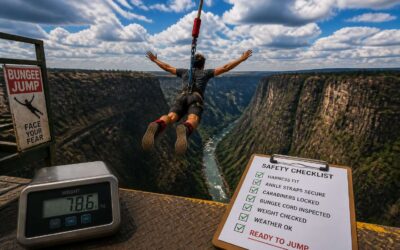
Bridge bungee jumping depends on precise weather evaluation. Operators place anemometers at deck level to measure wind load, yet gust readings are more critical than sustained averages. A 15 knot gust can shift a jumper’s path during the fall, so operators set conservative thresholds. Wind load assessments include the bridge’s natural oscillation. Each structure responds differently to wind pressure, and engineers model these dynamics before issuing any permit. Rain also compromises cord elasticity and grip, so jumps proceed only when forecast and live sensor data match.
- Maximum sustained wind speed below 20 mph
- Gust limit under 25 mph
- No active precipitation within 2 miles
These parameters function as absolute limits. Every jump occurs under a specific set of atmospheric conditions, where measured data determines whether the leap happens.
Emergency Procedures and Rescue Plans
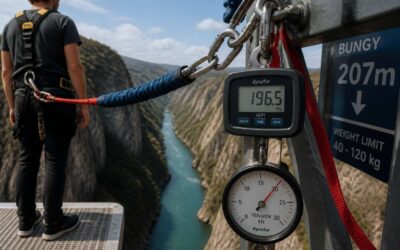
Bridge bungee jumping demands a layered safety framework. The Adventure Activities Licensing Authority (AALA) sets operational requirements for commercial jumps. Emergency procedures cover two scenarios: cord failure and jumper incapacitation. For cord failure, a secondary static line is always rigged. For incapacitation, a descending winch with a rescue basket is positioned on the deck.
Safety protocols include strict weight limits and medical exclusions. Regulations require daily equipment logs and third-party audits. Best practices dictate that rescue drills occur weekly, not annually. For jumpers, the emergency plan is simple: follow the deck marshal’s commands. Operators use a three-step verification system before release:
- Visual check of the harness and cord.
- Verbal confirmation from the jumper.
- Lanyard tug test by the marshal.
Rescue plans coordinate with local emergency services. Each operator maintains a response time under four minutes for any extraction. This standard is verified through timed simulations. The entire protocol is documented and reviewed every quarter.
Maintenance and Inspection of Jumping Equipment
Maintenance and inspection define the difference between a thrill and a tragedy in bridge bungee jumping. Every cord, harness, and anchor point receives a pre-jump visual check, but the deeper protocols happen when the deck is empty. Operators log each piece of equipment after every single use, tracking cumulative jump counts and environmental exposure. Cords are retired based on manufacturer limits, not appearance, because invisible microfractures accumulate internally.
Regulations in the United Kingdom mandate third-party audits every six months. Best practices, however, push operators to conduct their own load testing on a rotating schedule. A dedicated inspector examines webbing for UV degradation, checks stitching tension, and verifies the integrity of every carabiner lock.
- Torque test all bolt connections weekly
- Perform a drop test with a weighted dummy after 100 jumps
- Replace any cord that contacts sharp edges or chemicals
These routines, documented in daily logs, form the quiet assurance behind every launch. Without them, bridge bungee jumping becomes guesswork, and guesswork has no place on a bridge deck.
Insurance and Liability Considerations for Participants
There is a peculiar British genius for applying paperwork to vertigo. The public assumes the risk is vertical, but the administrators know it is horizontal, spread across forms, policies, and indemnity clauses. For the participant, the insurance and liability considerations for bridge bungee jumping function as a quiet, unglamorous floor. They are the unseen trampoline beneath the visible one.
Every reputable UK operator holds marine grade liability cover, often up to £10 million, specifically underwritten for adventure sports. This is not a generic business policy. It is a bespoke contract that names the bridge, the height, and the specific jumping platform. Participants sign a waiver that transfers inherent risk, but that document holds no water if the operator deviates from their risk assessment. A faulty zipper on your harness bag is their liability, not yours. A sudden gust of wind is an act of God, but a failure to check the anemometer is an act of negligence.
The dance of duty of care is fascinating to observe. The operator must prove you understood the risks, not that you merely signed them away. Therefore, your responsibility is to be legible. Answer the medical questionnaire with candour. A hidden heart murmur is a catastrophic surprise for everyone.
To make your insurance valid, you are typically required to:
– Book directly through an approved operator.
– Disclose any pre-existing conditions on the medical form.
– Follow the safety briefing instructions to the letter.
– Refrain from consuming alcohol within 12 hours of your jump time.
The insurer watches the operator, the operator watches the cord, and the cord watches you. This chain of vigilance is the true safety protocol. It is a delicate contract between courage and bureaucracy, with your premium paying for their perfection. In bridge bungee jumping, your safety is less about luck and more about the meticulous transfer of risk from the deck to the document.
Tips for Maximizing the Experience and Capturing Memories
Choosing the Optimal Time of Day for Visual Clarity
Some jumpers obsess over harness tension, but the real regret often comes from blurry footage. For bridge bungee jumping, the optimum time of day for visual clarity is the hour after sunrise or before sunset. The low angle of light flatters both the steel girders and your panicked grin; plus, the wind typically behaves. Midday jumps deliver harsh shadows and a permanent squint, so plan accordingly.
Capture memories with a dedicated camera operator, not a shaky selfie. Position them diagonally to the jump point during bridge bungee jumping. That angle catches the full arc of your descent without missing the bridge’s scale. Here are three practical checks:
- Set the frame to landscape orientation.
- Use a 4K resolution for cropping freedom.
- Press record before you step off the ledge.
The last one sounds obvious, but adrenaline makes people forgetful.
GoPro and Camera Setup for Dynamic Shot Angles
The heart stops. That single, silent second on the edge is pure, unfiltered adrenaline. Bridge bungee jumping offers a unique cocktail of terror and elation that you simply cannot find on a standard platform. The sheer mass of the structure beneath you, combined with the vast emptiness of the gorge below, creates a sensory overload that is both humbling and electrifying. It is the ultimate test of will, a moment where your brain screams stop while your spirit whispers go.
Your first jump is a lesson in trust, primarily in the equipment. As you peer over the railing, the harness tension becomes the most important sensation in the world. You must feel that solid, reassuring pull around your legs and torso. It is a physical contract between you and the operator. Before you take that leap, your mind races through the pre-flight checks you just witnessed. The operators are meticulous, their movements precise. This is not a thrill ride; it is a carefully calculated engineering event where structural integrity is paramount. The bridge is not just a prop; it is a partner in this dance with gravity.
Capturing the Leap
You will want to document this, but do not let the camera become a distraction. A dedicated camera operator, or a well-secured helmet mount, is essential. A shaky selfie stick will only blur the raw emotion of the moment, leaving you with unusable footage. For the best results, position a friend on the bridge deck to capture your facial expression right before the jump. The look of sheer panic mixed with determination is priceless. Then, rely on a second fixed angle, perhaps at the bottom or on a side arm, to capture the full dynamics of the fall. This dual perspective tells the complete story of your descent, from the wobbly legs to the triumphant rebound bounce.
When you are framing the shot, think about the field of view. The verticality of the jump is the star of the show. Shooting in landscape orientation is acceptable, but a portrait mode capture truly emphasises the dramatic drop and the immense scale of the structure. You want the shot to convey the distance, to show the tiny river or the winding road far below. Using a wide-angle lens helps to include both the sky above and the landing zone below, providing the necessary context for the viewer. Remember, the goal is to make your audience feel the height, not just see it.
The Practicalities and The Payoff
Beyond the camera, there are practical matters to consider. The weather dictates everything. A light breeze is fine, but sustained high winds will change the trajectory of your fall and could be dangerous. The optimal window is often early morning, when the air is still and the light is crisp. This also avoids the crowds, giving you more time to mentally prepare on the edge. You should also consider your clothing; wear something athletic and fitted that will not billow and create drag. Leave loose jewellery at home.
Here are a few points to keep in mind for a smooth experience:
– Always listen to the instructors, not your friends.
– Breathe deeply to combat the adrenaline dump.
– Look at the horizon, not the ground, while preparing.
– Do not eat a heavy meal right before your time slot.
Eventually, you will walk away with more than just a video. You will carry the knowledge that you defeated a primal fear with a single, definitive act. The rebound after the fall is a moment of pure, unadulterated joy, a stark contrast to the tension of the jump. The quiet swing, suspended over the abyss, offers a profound sense of peace. By the time you are lowered to the ground, your legs will be shaking, but your spirit will be soaring. You have not just jumped off a bridge; you have unlocked a level of confidence that follows you back into everyday life. That is the true reward of the leap.
Booking Strategies: Group Discounts and Off-Peak Slots
The heart stops. That single, silent second on the edge is pure, unfiltered adrenaline. Bridge bungee jumping offers a unique cocktail of terror and elation that you simply cannot find on a standard platform. The sheer mass of the structure beneath you, combined with the vast emptiness of the gorge below, creates a sensory overload that is both humbling and electrifying. It is the ultimate test of will, a moment where your brain screams stop while your spirit whispers go.
Your first jump is a lesson in trust, primarily in the equipment. As you peer over the railing, the harness tension becomes the most important sensation in the world. You must feel that solid, reassuring pull around your legs and torso. It is a physical contract between you and the operator. Before you take that leap, your mind races through the pre-flight checks you just witnessed. The operators are meticulous, their movements precise. This is not a thrill ride; it is a carefully calculated engineering event where structural integrity is paramount. The bridge is not just a prop; it is a partner in this dance with gravity.
You will want to document this, but do not let the camera become a distraction. A dedicated camera operator, or a well-secured helmet mount, is essential. A shaky selfie stick will only blur the raw emotion of the moment, leaving you with unusable footage. For the best results, position a friend on the bridge deck to capture your facial expression right before the jump. The look of sheer panic mixed with determination is priceless. Then, rely on a second fixed angle, perhaps at the bottom or on a side arm, to capture the full dynamics of the fall. This dual perspective tells the complete story of your descent, from the wobbly legs to the triumphant rebound bounce.
When you are framing the shot, think about the field of view. The verticality of the jump is the star of the show. Shooting in landscape orientation is acceptable, but a portrait mode capture truly emphasises the dramatic drop and the immense scale of the structure. You want the shot to convey the distance, to show the tiny river or the winding road far below. Using a wide-angle lens helps to include both the sky above and the landing zone below, providing the necessary context for the viewer. Remember, the goal is to make your audience feel the height, not just see it.
Beyond the camera, there are practical matters to consider. The weather dictates everything. A light breeze is fine, but sustained high winds will change the trajectory of your fall and could be dangerous. The optimal window is often early morning, when the air is still and the light is crisp. This also avoids the crowds, giving you more time to mentally prepare on the edge. You should also consider your clothing; wear something athletic and fitted that will not billow and create drag. Leave loose jewellery at home.
Here are a few points to keep in mind for a smooth experience:
– Always listen to the instructors, not your friends.
– Breathe deeply to combat the adrenaline dump.
– Look at the horizon, not the ground, while preparing.
– Do not eat a heavy meal right before your time slot.
Booking strategies can significantly alter your experience with bridge bungee jumping. Weekday mornings typically offer the quietest conditions and the most personal attention from the crew. If you are flexible with your schedule, aim for a midweek slot to avoid the queues that build up by midday. Many operators run seasonal promotions or package deals that include photography, so it pays to ask about combined rates before you commit. Group bookings often unlock a discount as well, which is a clever way to share the terror and the triumph with friends while saving a few pounds.
Eventually, you will walk away with more than just a video. You will carry the knowledge that you defeated a primal fear with a single, definitive act. The rebound after the fall is a moment of pure, unadulterated joy, a stark contrast to the tension of the jump. The quiet swing, suspended over the abyss, offers a profound sense of peace. By the time you are lowered to the ground, your legs will be shaking, but your spirit will be soaring. You have not just jumped off a bridge; you have unlocked a level of confidence that follows you back into everyday life. That is the true reward of the leap.
Post-Jump Recovery and Ways to Relive the Rush
The first freefall from a bridge is a masterclass in surrender. There is no platform to brace against, only the open air and the ancient stone or steel arching overhead. The moment your toes leave the edge, a strange silence replaces the roar of your pulse, and for a heartbeat you are suspended in pure possibility. It is this distinct transition from horizontal safety to vertical commitment that makes bridge bungee jumping a rite of passage for thrill-seekers across the UK.
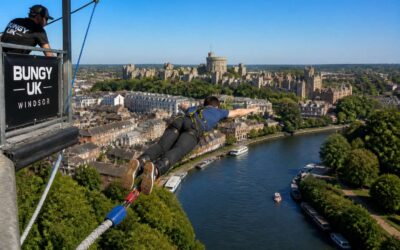
Unlike purpose-built towers, bridges offer a unique convergence of infrastructure and nature. In locations like the historic shores of the Tay or the dramatic gorges of the Welsh valleys, the jump is punctuated by the surrounding landscape. You are not just dropping; you are falling past layers of history and geography. The structure itself, whether a Victorian viaduct or a modern suspension bridge, adds a layer of gravitas that generic cranes simply cannot replicate. For those seeking the ultimate adrenaline rush rooted in real-world locations, this is the definitive experience.
Preparation is the key to unlocking the thrill. The professional crew will conduct a thorough harness check, and you will feel the reassuring tension of the cords as they are double-checked. Listen intently to the jargon of the riggers; their calm efficiency is the bedrock of your confidence. As you stand on the edge, the wind becomes your primary sensation. Do not fight it. Acknowledge the height, focus on the specific point on the horizon, and trust the physics that the experts have calculated. The jump is not an act of recklessness but a controlled plunge into trust.
Once you pull the ripcord on your courage, gravity takes over. The first few seconds are a sensory overload, but then the rebound occurs, and you are launched back towards the sky. This is the moment to look around. You get a brief, euphoric glimpse of the river below and the bridge above that you rarely see from the road. After the pendulum swings and you are safely lowered to a boat or the riverbank, an intense flood of relief and accomplishment washes over you. It is a primal reset.
To make the most of your day, consider this advice:
1. Book the first slot of the morning. The air is stiller, the light is golden, and the structure is quiet, which makes for a more personal experience.
2. Wear a GoPro on a chest mount, but keep a wrist strap on your camera. You will want a fixed angle for the fall and a handheld one for the reaction shots with your friends.
3. Hydrate and eat a light snack about an hour beforehand. You want energy, but you do not want a heavy stomach for the harness.
Ultimately, descending from a monumental structure is a demanding mental challenge that culminates in immense personal reward. The echo of your own yells mixed with the laughter of relief is the soundtrack you will replay for years. You will walk away with more than just adrenaline; you will carry the silent confidence that comes from staring down a massive engineering feat and answering its challenge with a single, decisive leap. It is a victory over the internal voice of doubt, echoing long after the cords have been coiled away.
0 Comments