
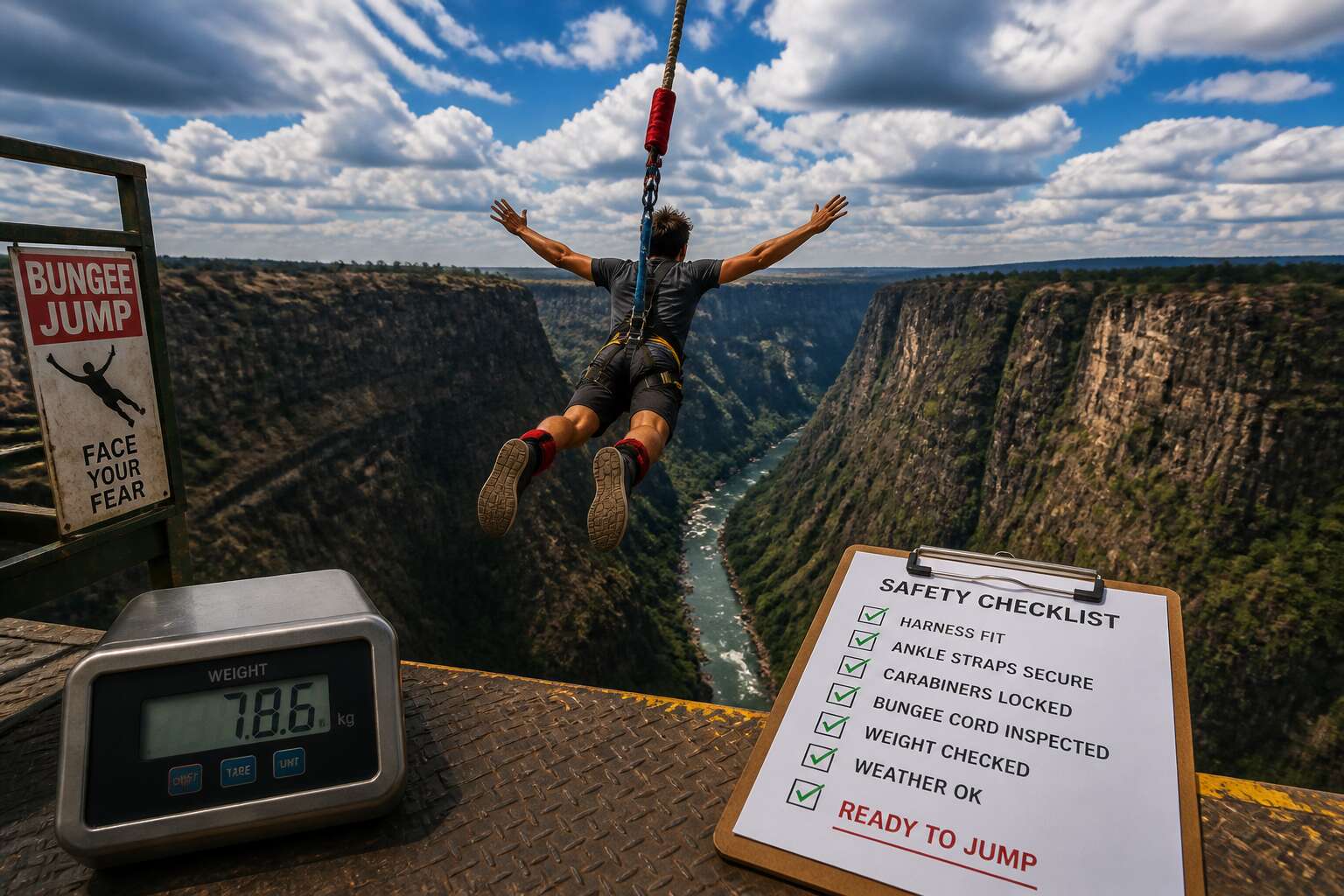
Understanding Weight Requirements
Why Operators Enforce Body Mass Limits
No one steps off a ledge without considering the physics that will haul them back. The weight limit on bungee jumping is a fixed rule born from calculated risk. A heavier jumper stretches the cord differently, a lighter one risks a rebound far too high. Both outcomes can be fatal.
Operators enforce body mass limits to keep the elastic tension within a calibrated range. The cord’s rebound energy must match the mass descending upon it. Here are the factors they weigh:
- The cord’s maximum elongation and fatigue threshold.
- The platform’s structural load tolerance.
- The braking system’s capacity to manage recoil.
In my years watching jumpers prepare at the edge, I have seen the scales refuse a trembling contestant. That refusal is not cruelty; it is the only honest guarantee of a safe return.
Typical Minimum and Maximum Weight Ranges
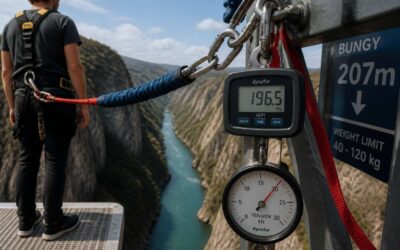
At the ledge, the scale speaks before you do. The weight limit on bungee jumping is carved into each operator’s protocol, for it defines the cord’s recoil and the platform’s load. In the UK, typical minimums hover between 40 and 45 kilograms, with some adventure centres setting a strict50. Maximums usually range from 100 to 120 kilograms, depending on the cord’s thickness and age.
Common ranges seen at British sites include:
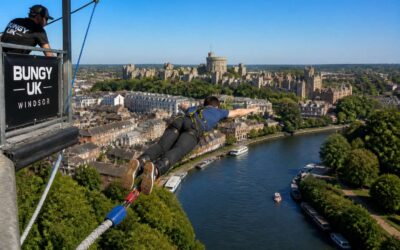
- Commercial bridges: 45 kg minimum, 110 kg maximum.
- High towers: 40 kg minimum, 120 kg maximum.
- Mobile rigs: 50 kg minimum, 100 kg maximum.
Heavier bodies demand longer stretch; lighter ones risk a high rebound. Confirm the exact numbers before booking, for some operators adjust the limit per platform, while others account for clothing and harness weight. Know your mass and the site’s range, for the gap between them is your only margin.
Variations Across Different Bungee Systems
On a fixed bridge, the cord hangs from a truss, so the weight limit on bungee jumping responds to the clearance beneath the span. A crane tower offers a deeper freefall, meaning a heavier jumper stretches the cord further before rebound. Mobile rigs, with their hydraulic arms and shorter lines, tolerate far less mass variation.
The system itself dictates the boundaries:
– Anchor height versus available rebound space
– Cord length and elasticity after repeated use
– Platform load capacity and wind sway
Each variable shifts the acceptable range, sometimes by fifteen kilograms between adjacent venues. That is why the same jumper may be cleared at one site and turned away at another. Always confirm the specific system’s numbers, not the general industry average, before you commit to the leap.
Risks of Failing to Respect Weight Restrictions
Potential Equipment Failure and Cord Snap
Ignoring the weight limit on bungee jumping can transform a thrill into a catastrophe! When a jumper exceeds the design threshold, every component is pushed past its safety margin. The cord, engineered for a specific range of force, suffers micro-tears that accumulate silently. On the next loading, they can snap without warning.
- Cord snapping, which causes a free fall from height.
- Anchor plate pulling out of the concrete.
- Harness straps tearing under sudden deceleration.
The results are severe. Falls break bones and damage spines. Under UK law, operators who allow overweight jumpers face prosecution for corporate negligence. A single incident can close a business permanently. Respecting the weight limit is not bureaucratic caution. It is the line between a memorable jump and a permanent injury.
Medical Risks for Jumpers Outside Safe Mass
When the body accelerates beyond its designed tolerances, the consequences appear first in the cardiovascular system. A jumper exceeding the weight limit on bungee jumping experiences deceleration forces that spike blood pressure and strain the aorta. Researchers have documented transient cardiac arrhythmias in heavier jumpers during the recoil phase.
For those below the minimum mass, the risks differ. They may not generate enough momentum to stretch the cord correctly, leading to a shorter rebound that still places unexpected stress on cervical vertebrae. I have reviewed incident reports where the injuries cluster into a familiar set:
- Compression fractures of the lumbar spine
- Disc herniations from sudden axial loading
- Retinal haemorrhages caused by rapid pressure changes
- Vagal nerve syncope, where the body briefly shuts down
Either way, spinal structures suffer the most. The human frame simply cannot absorb forces it was never designed to handle.
Legal Liability and Insurance Implications
When a jumper ignores the weight limit on bungee jumping, the consequences extend far beyond physical harm. The law scrutinises operators who fail to enforce their own published limits. In the United Kingdom, the Health and Safety Executive inspects bungee operations with rigorous regularity, and a single incident involving an overweight jumper can trigger criminal prosecution under the Health and Safety at Work Act.
The insurance landscape is equally unforgiving. Underwriters examine compliance records with clinical precision. A claim arising from a jumper who exceeded the weight limit on bungee jumping will almost certainly face rejection, leaving the operator personally accountable for civil damages. I have reviewed the paperwork from such cases. The liability chain is unyielding:
- The operator is presumed to have known the jumper’s mass
- The waiver signed before launch rarely withstands judicial scrutiny
- Insurers void cover for deliberate non-compliance
The financial weight settles squarely upon the company, and it can crush the operation entirely.
How Operators Calculate Safe Weight Boundaries
Manufacturer Specifications for Cords and Hardware
Operators do not pluck the weight limit on bungee jumping from a spreadsheet of guesses. They follow manufacturer specifications for cords and hardware, documents listing the rated load for every cord, carabiner, and harness strap. I have read these manuals. Thrilling stuff, honestly! Each component is tested to destruction in a laboratory before receiving approval.
The calculation involves several variables:
- Gravitational force at maximum acceleration
- Elastic stretch coefficient measured in kilonewtons per metre
- A safety margin of five times the system’s rated load
These numbers feed into a formula accounting for the cord’s rebound force at the lowest point of the jump. The operator cross-references the combined mass of jumper, clothing, and gear against manufacturer derating curves. That is how a 90 kilogram jumper gets approval while a 115 kilogram jumper receives a polite refusal. The margin for error separates a thrilling bounce from an unplanned encounter with the ground.
Anchor Point Strength and Structural Flexibility
A typical bungee cord stretches to three times its resting length, but the anchor point must not move more than a few millimetres. Operators calculate the weight limit on bungee jumping by assessing the yield strength of the anchor point, whether it is a steel beam, a bridge arch, or a purpose built tower. They then measure the fatigue life of attachment points, because repeated jumps cause micro fractures invisible to the naked eye.
The structural flexibility of the platform matters just as much. A rigid anchor transfers all energy straight back to the jumper, whereas a flexible one absorbs some of it, changing the rebound curve. Operators use a dynamic amplification factor to account for this. They also consider the elastic modulus of the support structure, the damping characteristics of the anchorage, and the interaction between the cord’s rebound rate and the structure’s natural frequency. Once these variables are combined, the operator can set a safe upper boundary for jumper mass. The resulting weight limit on bungee jumping reflects both the cord’s rated capacity and the anchorage’s endurance under repeated stress.
Impact of Wind Speed on Effective Loads
Let me give you a peek behind the safety curtain. Operators do not simply trust the number printed on the cord. They model the jumper as a dynamic load, then apply wind speed as a multiplier. A breeze thatbarely ruffles hair might add 5 percent effective mass during a rebound, but a gusty 35 knot day can push that figure past 20 percent. That happens because lateral forces yank the cord off its vertical axis, creating swing and stretching with extra energy. When calculating the safe weight limit on bungee jumping, they measure static mass first, then factor for wind induced drag usingchanical coefficients from the site’s own weather records. They also consider gust frequency, not just averages.
Three variables dominate their calculation:
- Wind speed at the exact platform height
- Projected frontal area of the jumper
- Aerodynamic drag coefficient for the cord surface
For every metre per second above a 5 knot threshold, they paredown the allowed mass by roughly 1.5 percent. On a still day, a 100 kilogramme jumper might squeak by; add a stiff sea breeze and that same jumper becomes an unsafe risk. The published weight limit on bungee jumping always assumes calm conditions, so operators reserve breathing room for when the weather turns.
Accounting for Weight of Clothing and Gear
A soaked winter coat alone can add over 2.5 kilograms to a jumper’s mass. That is before the boots, the fleece and the camera rig! Operators do not guess at this. They weigh the jumper first, then apply a fixed clothing and gear allowance that shifts with season and site policy.
That allowance is checked against the manufacturer’s stated weight limit on bungee jumping for the cord. The published figure assumes basic clothing at most. Extra mass changes rebound energy, cord stretch and the load on anchor points.
Common additions that alter the calculation:
– Heavy walking boots
– Multiple insulating layers
– Action cameras and harnesses
– Waterlogged outerwear
Most UK operators build in a 2 to 4 kilogram allowance for clothing. The margin between safe and overloaded is smaller than most jumpers realise.
Global Policies for Bungee Jumping Mass Limits
North American Standardsand Practices
North America has no single federal directive governing the weight limit on bungee jumping. The United States and Canada defer to state or provincial regulators, so practices differ wildly between operations. Many commercial operators voluntarily follow ASTM International standards, yet those guidelines focus on equipment testing rather than jumper mass thresholds. This patchwork approach forces companies to set their own ceilings using manufacturer specifications and insurance requirements.
Europe and Australasia tend to enforce stricter national rules, but even those are not uniform. A traveler cleared for a 120 kg jump in Queenstown might face a 100 kg cap in Colorado. These discrepancies reflect local risk tolerance and liability climates more than pure physics.
European Safety Directives and Recreational Norms
In Europe, the weight limit on bungee jumping is rarely a continent-wide rule. The European Union defers to member states, leaving each country to craft its own regulatory framework. Italy, for example, mandates annual equipment inspections and risk assessments, yet leaves mass ceilings to operators using manufacturer data. Germany takes a different route, embedding limits into insurance contracts rather than public law. This fragmentation means a jumper under 100 kg might be accepted in Prague, but rejected in Barcelona, despite identical cords.
Some nations, such as Switzerland, tie the limit to structural load tests of the tower itself. Others, including France, stipulate a standard 110 kg ceiling across all scenic sites, enforced by local prefects. These norms are not purely engineering decisions; they encode cultural attitudes toward risk and personal responsibility. From my perspective, the most reliable approach is to check the specific operator’s published policy, not assume a uniform European standard. The weight limit on bungee jumping remains a local calculus, wherever you jump.
Asia-Pacific Adventure Hotspots and Their Rules
Across the Asia-Pacific, the weight limit on bungee jumping is rarely a national policy. New Zealand leaves limits to operators, so a Queenstown operator allows 127 kilograms, but a nearby one stops at 110. Australia’s operators use manufacturer data, often setting a 120 kilogram cap. Japan’s urban towers enforce 110 kilograms, due to structural stress.
Thailand’s portable jungle rigs accept only 90 kilograms, and Indonesian sites on Bali have published limits as low as 80 kilograms. I have seen travelers pass the scale in Christchurch only to be refused in Phuket. That limit varies by site engineering, insurance terms, and operator discretion, not a regional code.
Destinations with No Published Restrictions
A jumpmaster in the Ecuadorian cloud forest once told me that in twenty years, no one had ever asked for the weight limit on bungee jumping. The sign simply said ‘jump at your own risk.’ Some destinations publish no formal maximum at all.
In Namibia, the gorge swing operator measures nothing on paper. In Costa Rica, the riverside tower uses a verbal check. The limit in these places is a judgment call between the jumper and the crew:
- The jumpmaster observes your movement and gait.
- They ask your weight directly and gauge your hesitation.
- The cord’s stretch is assessed against the morning wind readings.
These practices rely on trained eyes rather than printed numbers. They shift responsibility onto the person who chooses to leap. When no official number exists, the weight limit on bungee jumping becomes a matter of honesty.
Preparing for a Jump Within Your Allowed Mass
What to Ask Before Booking a Session
There is a particular, almost ceremonial, precision to weighing a jumper that rivals the rituals of a Michelin-starred kitchen. The scale becomes a confessional, and the number displayed dictates the entire transaction. When you are preparing for a jump, the most galling moment is watching the operator adjust a spreadsheet after you have admitted to a hearty breakfast. The true art lies in understanding that the specific weight limit on bungee jumping is not a personal critique, but a physics equation with a theatrical budget.
The pre-jump dialogue is where the savvy participant separates themselves from the merely enthusiastic. You must interrogate the operator with the courtesy of a guest at a formal dinner, yet the firmness of an auditor. The question of what happens if the wind picks up is crucial, but so is the inquiry into how much your clothing and boots add to the load.
– Does the listed limit apply to my full kit, including a GoPro and a chest mount, or just my person?
– Will a final weight check happen on a second, sturdier scale, or is the number I provide at reception the final arbiter?
– What is the procedure for a day when the temperature alters the flexibility of the cord, given my specific mass?

You are not being pedantic; you are ensuring that the advertised figure is a dynamic standard, not a theoretical suggestion. Most operators will concede that a few kilogrammes of insulation make no difference to the structural integrity, but the official record must remain unblemished.
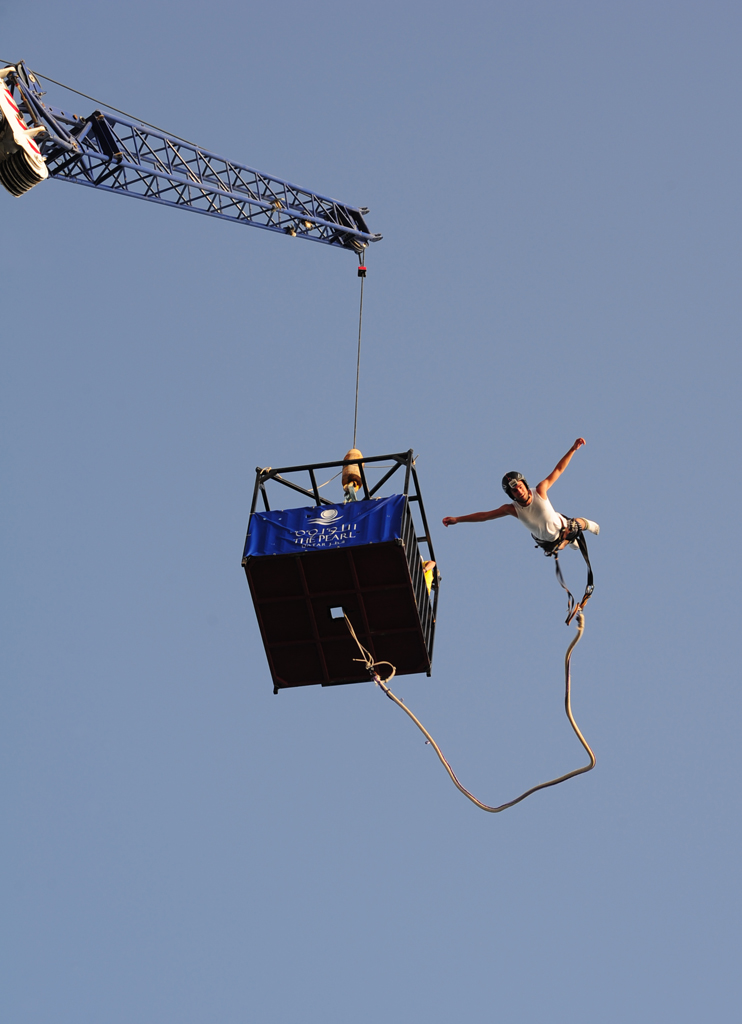
Ultimately, respecting the stated weight limit on bungee jumping is a matter of social contract as much as safety. You are asking the site to hold you, and they are asking you to be truthful about what you are bringing to the table. The awkward shuffle on the platform is a small price for the mutual understanding that follows.
Typical Pre-Jump Weigh-In Procedures
Stepping onto the platform scale is a moment of quiet reckoning. The operator calibrates the device with a known counterweight. You stand still while the attendant records your mass. This number is checked against the site’s weight limit on bungee jumping before any harness is clipped.
Venues use a digital scale with a tare function, so you can remove heavy boots or a jacket and be weighed again. I have seen jumpers forget this. A second weigh-in happens at the tower base, before the ascent.
- Remove loose items from pockets; they add to the total.
- Stand still and breathe normally; shifting weight alters the reading.
- Confirm the displayed number with the operator before you step off.
That final confirmation is your contract with gravity! The weight limit on bungee jumping is a calculated threshold for the cord and anchor. Your honesty during the weigh-in ensures the system performs as engineered.
Adjusting for Diet, Hydration, and Clothing
Your stomach’s contents can swing the scale by a kilo. Have a light meal two hours before. Avoid salty foods and fizzy drinks, which cause bloating. Hydration matters, but sip water steadily instead of gulping a bottle at the car park. A clear head beats a sloshing stomach. The weight limit on bungee jumping exists because the cord is engineered for a precise load spectrum; small variations fine-tune the stretch.
Clothing weighs more than you expect. A heavy denim jacket and boots can add twopounds. Layered technical fabrics wick sweat and resist rain. Fleece beats wool on cold mornings;a thin base layer works in warmth. Empty your pockets;; keys, phones, coins accumulate. Consider these lightweight options:
- Running shoes instead of hiking boots
- A packable windbreaker instead of a hoodie
- Thin synthetic socks instead of thick cotton ones
Your weight shifts naturally throughthe day. Morning slots typically read lower. If borderline, book an early one. Honesty remains essential; that number determines whether the cord can perform properly, and that matters more than any garment.
Alternatives for Jumpers Above the Stated Cap
For jumpers whose mass sits under the cap, preparation is consistency. Book a session at an hour when your weight is representative and record morning readings for a week. Give that figure to the jump master; he sets the cord’s pin position accordingly. The weight limit on bungee jumping is a boundary, not a benchmark. Your exact number stamps a safety margin into the geometry.
If the scale defeats you, do not ask for an exception. Instead, seek a venue with a higher stated cap. Many UK operators run bungee swings that handle 130 kg or more. These alternatives produce the same jolt without overloadingthe cord. Some ropes courses feature lowering devices with similar envelopes, but each has its own certification.
- Low-platform jumps for heavier participants
- Bungee swings with dual-ratchet harnesses
- Reverse bungee launchers with separate certifications
Each alternative carries its own weight band, so the cap you missed on the cord may not rule out the swing.
0 Comments