
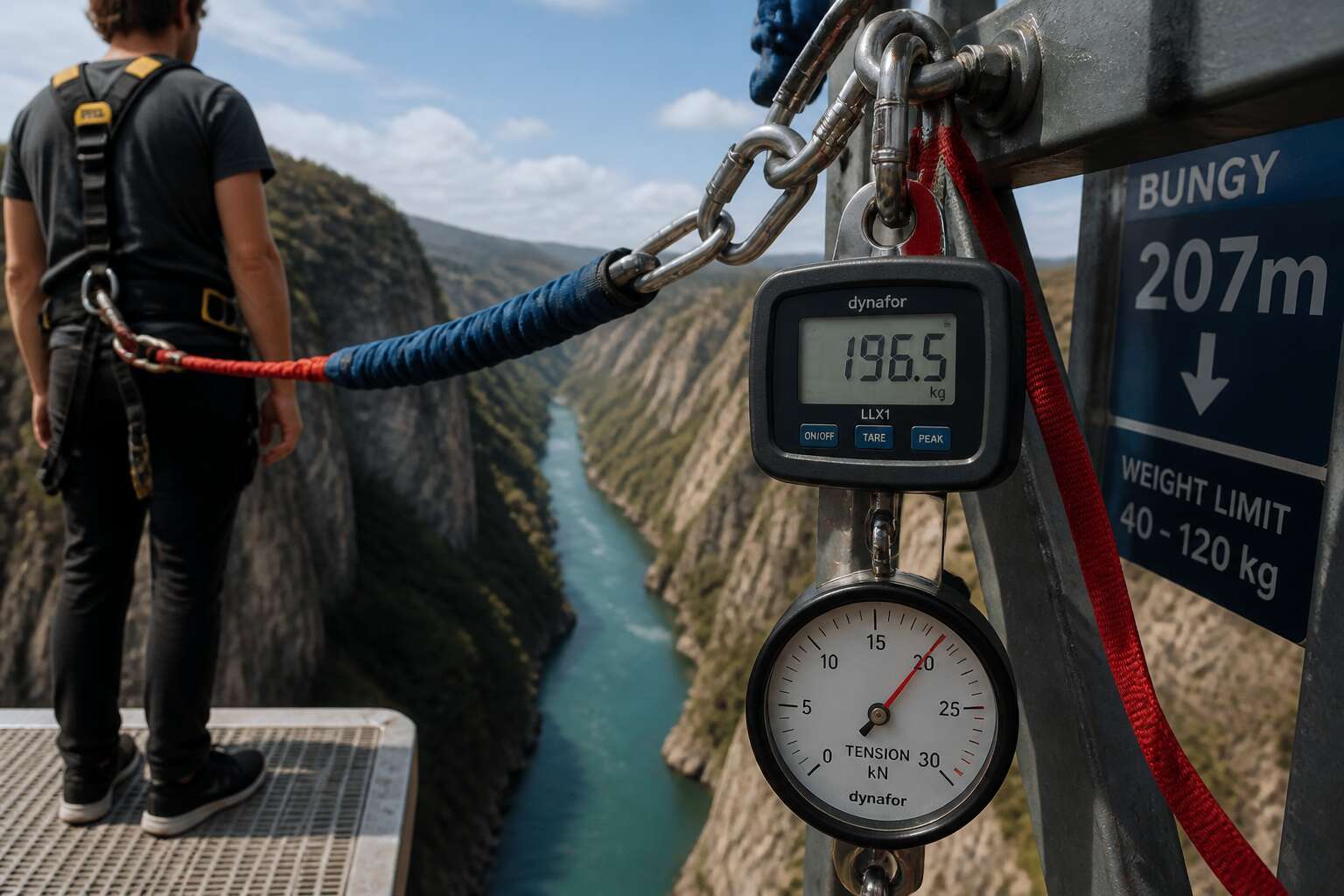
The Importance of Weight Restrictions in Bungee Jumping
The bungee jumping weight limit is not a bureaucratic hurdle. It is a calculation born from physics and hard-won experience. The cord’s elasticity, the platform’s height, and the jumper’s mass all form one delicate equation. Exceed the limit and the cord may not stretch enough to absorb the fall. Stay far under it, and you might not get the rebound you expect.
Operators set these figures for every rig, usually between 45 and 120 kilograms. The limits protect both the jumper and the equipment. The harness must fit snugly, the cord must retain its integrity, and the anchor point must handle the sudden load. Because the bungee jumping weight limit varies between operators, you should always confirm the exact range before booking. I check the posted numbers before any jump. It saves disappointment and, more importantly, it keeps everyone safe.
Typical Weight Boundaries Across Jump Locations
You might have the nerve, but do you have the number? A surprising number of jump sites enforce a bungee jumping weight limit that ranges from 90 to 130 kilograms.
The variance is staggering. Some operators cap you at 90 kilograms, while others accept up to 130. I once watched a rugby fan get politely redirected to a zip line.
Consider common limits:
- Swiss bridge jumps: 100 kilograms
- UK commercial towers: 90 kilograms
- New Zealand river operators: 120 kilograms
The real surprise is the inconsistency. Your weight might be fine in Queenstown but a firm no in Bristol. Always confirm the exact figure before you book, because the number is non-negotiable.
Variables Determining the Upper Weight Allowance
Most people assume the bungee jumping weight limit is a fixed number. It isn’t! Operators calculate a safe range for every jump, and that range depends on several physical and structural variables.
The cord’s elasticity is the first factor. A thicker cord can absorb more kinetic energy, but only up to a point. The platform height and the jumper’s potential velocity also matter. The harness must distribute force without straining the ankles or hips.
- Cord stiffness and rebound ratio
- Anchorage point rating
- Jumper’s body mass index
For example, a 100 kg jumper on a short bridge needs a completely different setup than a 60 kg jumper from a crane. That is why you cannot rely on a universal bungee jumping weight limit. It shifts with the equipment and the site’s engineering.
Physical and Equipment Safety for High-Weight Jumpers
When you near the upper bungee jumping weight limit, the physics become unforgiving. Your mass determines deceleration rates, and a rig tuned for a 60 kg jumper will behave wildly differently for a 100 kg one. Operators who cater to heavier clients use custom gear. I once watched a team in Scotland attach tandem cords to a 15 stone participant, spreading the force across two points.
The harness matters enormously. It must sit across your hip bones, never your waist, because compression loads crush soft tissue. Thicker padding helps, but it cannot replace proper fit. Equipment checks should be obsessive.
– Confirm the harness certification matches your exact weight
– Ask for the cord replacement log
– Verify the anchor point’s load rating with fresh hardware
Your spine endures the sharpest strain during rebounds. High-weight jumpers often report dizziness from rapid G-force shifts, so medical clearance above 120 kg is routine. The bungee jumping weight limit is not a suggestion; it is a calculation. Every cord, buckle, and bolt must meet that specific ceiling. Nothing less keeps you safe.

Practical Steps to Ensure Compliance With Weight Rules
Bungee jumping weight limit rules exist for a reason, and they are not negotiable. Before you book, contact the operator directly and ask for their specific range. Most UK sites publish this information online, but a quick phone call removes any ambiguity.
On the day of your jump, follow a few practical steps to keep yourself safe:
- Weigh yourself in the morning, wearing the exact clothing you will jump in.
- Remove keys, phones, and any loose items from your pockets.
- Be honest with the staff when they ask your weight.
Weighing more than you estimated is common, so do not let it unsettle you. The bungee jumping weight limit is a safety threshold, not a personal judgment. Respect it, and the only thing you will feel is the rush.


0 Comments