
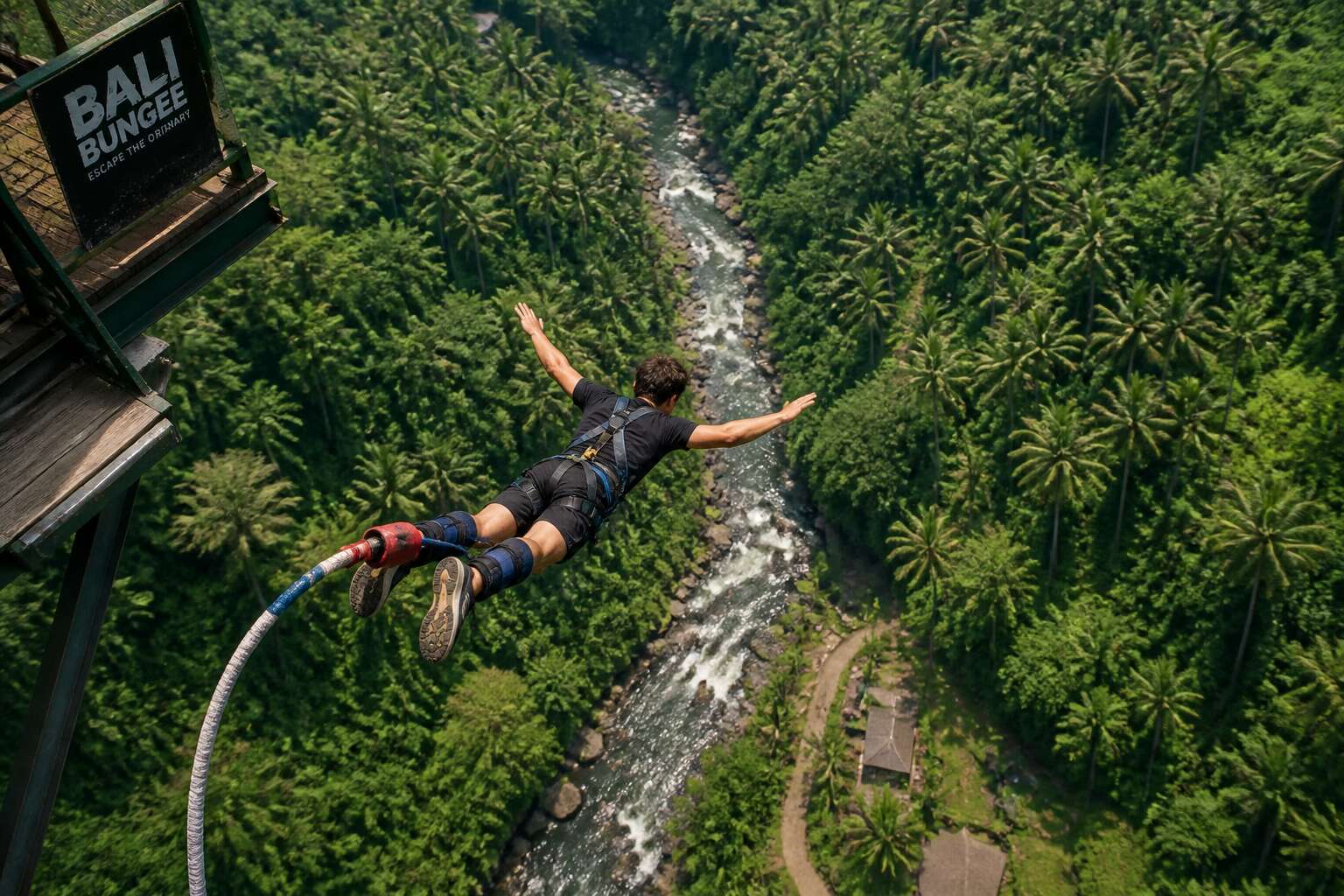
Best Locations for Bungee Jumping in Bali
Iconic Jump Sites Across the Island
The sheer drop from Bali’s jump platforms is enough to silence the boldest thrill seeker. Some sites cross rivers, others cling to cliffs. One thing remains constant: your heart pounds before you even step off.
Three locations have earned legendary status among the island’s jump community:
- The Ayung River Bridge, where the water moves fast below and the harness feels too loose.
- The Uluwatu cliff spot, a 40 metre drop straight into a sea breeze.
- The Karangasem gorge, tucked into a jungle valley that swallows your scream.
For anyone chasing bungee jumping bali, these are the names you will remember. I have stood on all three, and each one rewired my sense of fear.
Bali’s Cliffside Bungee Platforms
Most travellers assume every bungee jumping Bali platform offers the same experience. They do not. The cliffside platforms along the southern coast vary wildly in height and approach. Some require a short climb that feels harder than the jump itself. Others place you at the edge with no time to think.
I have a simple rule when scouting a new platform. Watch the people before you. If the staff is laughing and the jumpers are smiling, you are in good hands.
1. Inspect the harness fittings yourself
2. Check the landing zone for obstacles
3. Look for backup cables and a visible safety log
The best locations for bungee jumping in Bali are not the tallest. They are the ones where the crew treats the jump seriously and the vibe stays light. That combination turns panic into a story you will actually enjoy retelling. Trust me.
Jumping Over the Ayung River
The Ayung River delivers a different kind of bungee jumping bali. No salt air, no ocean roar. Just wet earth and the rush of water below. That changes your headspace before you step to the edge. I have jumped from both cliffs and river bridges. The river feels more intimate.
You hang above a narrow gorge. The green closes in. The fall is quick, but the descent past rock and vine makes your stomach drop twice! One second you are falling, the next you are staring at the current.
Check these before you jump:
- Anchor point at the bridge
- Cord replacement after wet season
- Recovery boat position
The Ayung is shallow in places. The crew must pull you out with precision. A good team makes the whole thing feel controlled.
Nearby Island Alternatives for Thrill Seekers
Most jumpers assume Bali has more than one permanent rig. It does not. Beyond the river bridge and the cliffside platforms, the action shifts to temporary events and the surrounding islands. For those who have already experienced bungee jumping bali, the next challenge comes from pop-up towers near Canggu and in the Bukit peninsula. I have watched crews bolt a platform to a coconut tree and call it ready. A crew can assemble a 40 metre rig in a single morning, then vanish by sunset. That means you have to watch local boards daily.
The signs of a safe rig are simple:
- A certified cord with a visible manufacture date
- Carabiners free of rust
- One crew member whose only job is watching the anchor
The Gili Islands deliver the closest alternative. You pay a local boatman, climb a wooden platform, and leap into open sea. Lombok’s south coast has similar spots. None offer official bungee jumping bali, but they demand the same nerve.
Scenic Views and Backdrops
Most jumpers close their eyes. That is a mistake. The best part of bungee jumping bali is the view on the way down, not the fall. You get one or two seconds of clarity before the cord catches, enough to take it in.
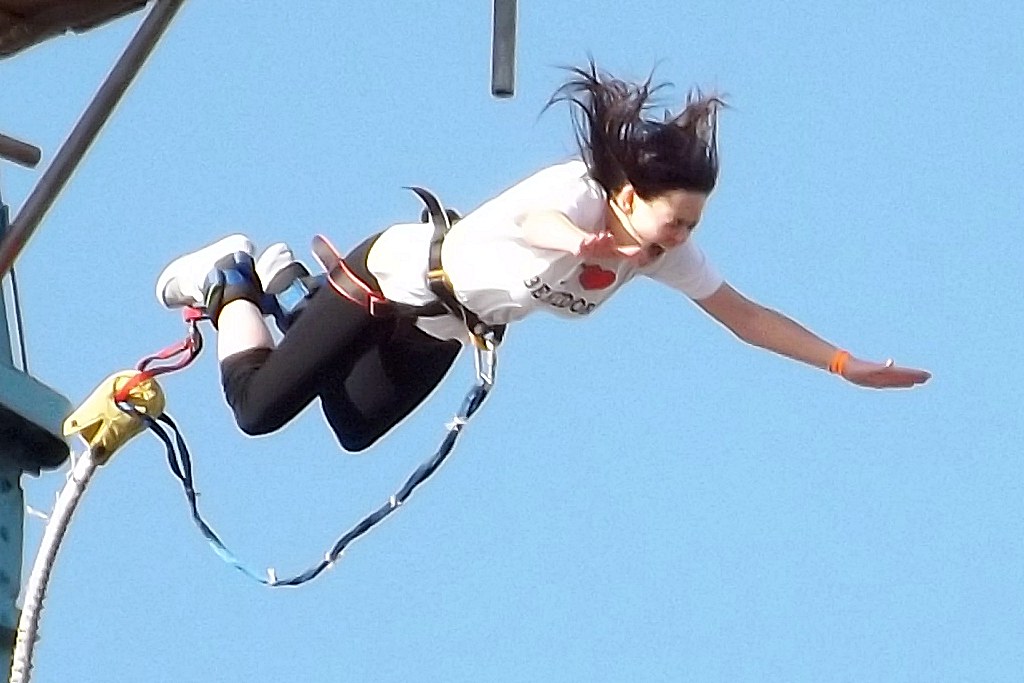
The backdrops change across bungee jumping bali locations. Some rigs face inland, where volcanic silhouettes and rice terraces dominate the horizon. Others point toward the sea, offering a straight line of sight to the Indian Ocean. The landscape does more than decorate the photos. It shifts your sense of scale, which is what you need when stepping off a ledge.
- Sunrise jumps offer orange and violet skies
- Midday jumps reveal the jungle in full green
- Late afternoon jumps cast long shadows on the water
Time the leap accordingly. The view is half the experience, the other half is the screaming.
Safety Standards and Certification
International Safety Certifications to Look For
Only a handful of global bodies regulate the plunge, so certification is your only real protection. For bungee jumping bali, a trustworthy operator will happily share proof of international standards. Look for these:
- ISO 9001 certification for consistent operational procedures.
- CE marked harnesses, carabiners, and bungee cords.
- Daily load testing logs and third party inspection reports.
The certification itself matters less than the operator’s willingness to show it. A company that hides its paperwork is a company that hides its problems. Respect that, and the free fall becomes a calculated risk rather than a blind gamble!
Equipment Inspection and Maintenance Protocols
Certification gets you through the gate, but inspection keeps you safe on the platform. Before every jump, the crew at a reputable bungee jumping bali operation runs a checklist that would make an airline pilot nod. They examine each carabiner for hairline fractures, flex the cord, and test the anchor points with a practiced tug.
The maintenance behind bungee jumping bali is methodical. Cords are retired based on jump count, not calendar age. Every bungee has a logbook recording each descent, weather condition, and shift in elasticity. The gear room is off limits to visitors. Equipment is precision machinery, not a photo prop.
- Webbing is checked for fraying and UV damage before each session.
- Harnesses are load tested weekly and retired at the first sign of wear.
You can watch some of these checks from the viewing area. The best operators perform them openly, knowing that visible diligence builds trust.
Instructor Qualifications and Training
The most sophisticated equipment becomes meaningless without a jumpmaster who has earned the right to hold that responsibility. In bungee jumping bali, instructor qualifications follow international standards that go far beyond a weekend course. Reputable operators demand jumpmasters complete accredited training in rigging physics, emergency descent procedures, and psychological assessment of jumpers. Certification is only the starting point. The industry now mandates recurrent evaluation every six months, including simulated malfunctions and unannounced peer reviews.
- 500 supervised jumps before operating solo
- Advanced first aid and high angle rescue credentials
- Training in recognising panic and hyperventilation early
These standards reflect a simple truth. Human judgement, not equipment, determines most outcomes. I have seen a jumpmaster halt a jump because of a subtle shift in wind, not because the equipment failed. That quiet decisiveness separates professionals from amateurs. That is why bungee jumping bali invests so heavily in the people behind the platform.
Weather Conditions and Safety Cancellations
Weather governs every decision on the platform. A sudden squall can alter wind shear within seconds, so operators in bungee jumping bali rely on handheld anemometers and real time satellite feeds. If gusts exceed twelve knots, jumps pause. If rain reduces visibility, cancellations happen before anyone queues.
Certification for the operation itself matters as much as the gear. Look for current permits from Indonesian tourism authorities and third party audits that verify emergency response plans. These standards are not decorative.
- Wind speed thresholds checked hourly
- Lightning protocols within a five kilometre radius
- Reassessment after any weather shift
I once watched a jumpmaster call a halt because cloud shadows moved too fast across the gorge. That level of caution, repeated daily, defines safe bungee jumping bali experiences.
Medical Requirements and Age Restrictions
I have watched jumpmasters refuse a jumper for a single sleepless night. Before the harness clicks, the medical questionnaire demands honesty. Bungee jumping bali operators enforce age limits from fourteen to sixty five, with parental consent for minors. Your weight must sit between forty five and one hundred twenty kilograms. Certificates from accredited physicians help, but on site staff verify blood pressure and joint stability.
- No history of retinal detachment
- No spinal surgery within two years
- No medication that alters perception
The platform master observes your stance, not only the signed form. That human check, repeated daily, turns paperwork into protection.
What to Expect: Experience and Adrenaline
The Pre-Jump Preparation Process
The average freefall lasts three seconds, but those three seconds seem to stretch far beyond their measure. For many first timers, the anticipation of bungee jumping bali proves far heavier than the leap itself. This is where the true preparation begins.
Before you step toward the edge, the crew secures the harness with firm confidence. They explain the foot placement and the exact moment you will tilt forward. You shuffle to the platform lip, knees bent, attempting to steady your breath.
- The instructor counts down in a calm, steady voice.
- You grip the railings with every ounce of strength.
- You remember to breathe, then forget, then remember again.
Then you fall! The world rushes upward, the river becomes a blur of jade and foam, and the cord catches you with an exhilarating snap. When you rebound, hanging upside down and laughing, you finally understand why bungee jumping bali draws people to this exact spot.
The Free Fall Sensation: How It Feels
Your first bungee jumping bali free fall lasts roughly three seconds, yet the body records each millisecond with unnatural clarity. The stomach rises, the wind fills your ears, and the brain halts all thought. A raw sensory overload takes over. Gravity pulls every limb downward without resistance, and you have no choice but to submit.
The weightlessness feels abrupt, not gentle. The river becomes a green blur, but your eyes cannot track its distance. The cord tightens, and the rebound throws you upward with a snap that travels through your spine. Your heart pounds with a strange, joyful confusion.
- A temporary loss of orientation between up and down
- A muffled rush of air that drowns out everything else
- An involuntary gasp at the moment of rebound
That gasp often turns to laughter before the swinging even stops.
Swinging and Rebounding After the Fall
The rebound transforms the bungee jumping bali experience. Your body swings upward with a force independent of the cord’s physics. The first bounce is strongest, compressing your spine before gravity pulls you down for a second fall. Each oscillation loses intensity, letting your senses return.
Adrenaline peaks during swings, not the drop. Your brain catches up to what your body knows. The river steadies, the sky stops spinning, the harness feels familiar. You notice details, the rope’s tension, the crew’s faces, the river’s sound.
- The swinging lasts 30 to 60 seconds
- Rebound force diminishes by half each cycle
- Most jumpers laugh during the second or third swing
This phase defines bungee jumping bali. The fall is momentary, but the rebound stretches time. You hang there breathing hard, feeling the cord’s rhythm slow until a crew member pulls you up. I have watched that suspended moment become the memory that lasts.
Duration of the Experience and Aftermath
The mathematics of the rebound feels impossible while you are suspended. One moment your stomach is still falling, the next your spine compresses as the cord arrests your descent. The second bounce arrives softer, and by the third swing your breathing returns to a normal rhythm. Bungee jumping bali rewards patience. The best moments occur after the initial chaos, when your vision clears and the canyon returns to focus. Most first timers describe the entire sequence as lasting longer than expected, because the body measures time differently under stress.
The crew tracks your movements from the platform. They wait for the swings to settle before lowering the retrieval line. That wait often takes longer than jumpers anticipate. There is no rush, no countdown. The river moves beneath you, the harness holds firm, and the quiet wraps around the gorge. I have watched jumpers hang there grinning, their hands gripping the cord, their minds already replaying the drop.
- Expect a total adrenaline period of roughly one to two minutes from jump to retrieval.
- Your heart rate peaks during the first rebound, not during the initial fall.
- Jumpers typically report feeling fully oriented by the fourth or fifth swing.
The aftermath arrives with a strange clarity. Your legs may shake when the crew pulls you back onto the platform. Your ears ring slightly. The sound of the river returns first, then the voices of other jumpers, then your own laughter. Bungee jumping bali leaves a residue of alertness that lasts for hours. Many people find themselves unusually calm afterward, as if the body has released something it had been holding for years. That calm is part of the experience. You carry it down the stairs, into the van, and well into dinner.
Emotional Rollercoaster: Fear to Euphoria
The moment is rarely how you rehearsed it. On the platform, the canyon below and the river’s distant hiss compete with the thud of your own pulse. The harness cinches tight, the crew gives their final checks, and for a split second your brain offers a clear, rational argument for stepping back. That debate ends quickly. The leap is a surrender.
This is where bungee jumping bali separates the experience from the anticipation. Somewhere between the rebound and the second swing, the panic loses its grip. Your throat releases a sound you did not plan. Laughter, shouting, something raw.
The emotional arc follows a familiar pattern:
- The fear, which peals like a siren in the seconds before departure.
- The surrender, where your body stops fighting the drop.
- The euphoria, a chemical flood that arrives uninvited and stays for hours.
Every jumper negotiates their own terms with that lingering fear. The platform never gets easier. The reward is the strange, giddy silence afterward, when the adrenaline has drained and your legs remember they belong to you.
Group Bookings and Shared Experiences
One jumper’s shriek starts the next person’s countdown. This is the unadvertised contract of group bookings. In bungee jumping bali, solo flights are common, but shared departures create a different rhythm. The platform crew notices. They time their instructions to the group’s pace.
You do not carry fear alone. You carry it in sequence. Watching a stranger’s legs give way before the drop gives your own resolve a template. After the landing, the group gathers near the recovery area. The talk is immediate, loud, and repetitive. The adrenaline does not need an audience, but it accepts one.
Practical Information: Pricing, Booking, and Requirements
Average Cost of Bungee Jumping in Bali
Bungee jumping bali pricing is fairly consistent, with a single jump usually costing between 550,000 and 850,000 IDR. For UK travellers, that is roughly £28 to £42, a price that has held steady across recent seasons. Most operators accept walk-ups, but booking online the day before secures your preferred slot and sidesteps the midday queues.
Payment is typically by card or local e-money, and deposits hover around 100,000 IDR. You will need to sort out a few things before strapping in:
- Bring a passport or national ID to register
- Wear closed-toe shoes, or hire theirs on site
- Confirm your weight at check-in, as limits are enforced
Insurance requirements stay straightforward: you sign a waiver confirming you have no pre-existing conditions. Always check the cancellation policy before paying, since weather related refunds are processed in full. Comparing prices across the island is wise, as bungee jumping bali attracts premium rates at cliffside locations while river venues charge less for identical certified equipment.
Booking Online vs Walk-In Rates
Walk-ins happen, but you risk waiting through the midday heat. I prefer booking online the day before. Walk-in rates rarely differ, yet online booking secures your exact time slot and skips the queue. Payment methods vary, so confirm whether the operator takes card or local e-money before you pay. The deposit of 100,000 IDR holds your spot, and weather cancellations refund fully.
For bungee jumping bali, the booking process itself is straightforward, but the steps matter: 1. Choose your jump time on the website. 2. Pay the deposit with your preferred method. 3. Receive a confirmation with the waiver attached. 4. Arrive 30 minutes early for check-in. The online rate at cliffside venues includes priority access, whereas river locations charge less.
Included Services: Photos, Videos, and Transfers
For bungee jumping bali, the gap between quoted and final price often comes down to extras. A base fee covers the jump and harness, but photos and videos are separate at roughly 75,000 IDR per package. Some cliffside operators bundle two camera angles into their premium tier, while river venues include a single handheld shot. Transfers from Seminyak or Ubud add 150,000 IDR per person, so I factor that into the total before comparing options.
Requirements are rarely demanding, yet they matter:
- Valid passport or ID for the waiver
- Closed-toe shoes (sandals are refused)
- No alcohol within six hours of your slot
- Signed waiver, which you receive after the deposit
The deposit of 100,000 IDR secures your time, and the balance settles on arrival. Card and e-money work at most platforms, but cash remains essential at smaller river jumps. For bungee jumping bali, the practical side is refreshingly simple if you verify what is included before paying.
Weight and Fitness Limitations
Most platforms cap jumpers at 120 kilograms, though the exact ceiling depends on the cord’s rated stretch. I have watched heavier guests turned away at the scale, not through caprice but through physics. The harness must fit snugly around the thighs and waist. If the webbing cannot close properly, no operator will waive the restriction.
Booking is straightforward: select a slot, pay the 100,000 IDR deposit, and arrive with your passport or ID. The medical waiver asks about back injuries, pregnancy, and recent surgery. These are not formalities. They exist because the rebound torque places unusual strain on the spine.
- Expect a weigh-in before every bungee jumping bali session
- Blood pressure and heart conditions require a doctor’s note
- Joint problems, especially knees and ankles, may disqualify you
The fitness threshold is less about athleticism and more about structural integrity. If you can climb stairs without pain, you are likely fine. If you have ever dislocated a shoulder, reconsider.
What to Wear and Bring
Pricing for bungee jumping bali follows a fixed structure. A single jump costs between 500,000 and 750,000 IDR, with online bookings undercutting walk-in rates by a comfortable margin. The 100,000 IDR deposit holds your slot; the remainder is due at the platform. Bring your passport or ID, because the waiver is not a suggestion.
What you wear determines how the harness grips you. Fitted shorts, a t-shirt, and closed shoes work best. Loose fabric catches the wind and chafes against the webbing. Leave jewellery and loose objects behind.
- Secure pockets or a small locker for valuables
- Cash for the photo and video package, roughly 150,000 IDR
- A water bottle for after the jump, not before
Arrive early, dressed simply, and the scale becomes the only authority you answer to before your bungee jumping bali session begins.
Best Time of Day to Book Your Jump
Seven in the morning feels like a punishment until you reach the platform. For bungee jumping bali, the earliest slot means a cool, empty staging area and no queue for the harness. By eleven, the heat builds, the walkway fills with spectators, and the wait stretches past an hour. Afternoon bookings also risk a tired crew and a wind that picks up unpredictably.
The booking office will rarely volunteer this timing intelligence on its own. You can, however, read the signs:
1. Weekday mornings see the fewest school groups and first-timers.
2. The 07:00 slot consistently shows the shortest observed delays.
3. Staff rotation at midday changes the pace of harness checks.
Your anxiety will supply enough variables. The morning hour removes several.
Tips for First-Timers and Capturing the Moment
Overcoming Fear and Anxiety Before the Jump
The seconds before the leap are a test of internal negotiation. Your pulse accelerates, yet your thoughts sharpen, and this paradox defines the experience. For many first-timers, the fear of bungee jumping bali is a series of small surrenders, each breath a decision to continue. I have seen people whisper reasons for standing there, some without any prayer at all.
Then the moment arrives, and time behaves strangely. The plunge compresses your senses into a single, lucid frame. Capturing that instant requires accepting that you are both the observer and the event. The rebound offers a second perspective, a slower look at the gorge below. This is where bravery transforms into memory.
Techniques for a Smoother Jump
Fix your gaze on a far point across the gorge. This steadies the body and narrows the void. For your first bungee jumping bali, cross your arms over your chest. This prevents the instinct to flail, which can twist the cord.
Capturing the leap requires a side angle. The rebound reveals the true expression. Ask for slow motion, because the descent becomes a blur while the recoil holds the story.
- Hold your breath until the cord catches.
- Tuck your chin to avoid neck whip.
The platform staff know the exact moment. Trust their hands. Their timing is more reliable than your anticipation.
Choosing the Right Photo and Video Package
Ask any regular jumper, and they will say the photo package matters more than the jump itself. For a first-timer, the memory is the product. Decide on your package before clipping in. A basic option includes one angle. The premium adds a second camera on the rebound. That rebound holds the honest expression.
Check these package points.
- Resolution and frame rate for slow motion.
- Number of cameras and angles.
- Digital transfer to your phone.
Capturing the moment means standing still. I trust the staff to time the shot. For bungee jumping bali, the official photographers know the beat. Your phone will miss the vertical drop. Choose the package that saves you trouble.
GoPro and Action Camera Guidelines
The emptiness below is a constant whisper. First timers often try to think their way through the fall. That is a mistake. The only negotiation is surrender. Let your heels leave the platform before your mind catches up. Lock your gaze on the horizon. The body knows the descent better than the brain ever will. Exhale just before the leap. It quiets the tremor in your knees.
For GoPro and action camera users on a bungee jumping bali platform, the wrist mount is a futile gesture. The camera will capture your knuckles and the sky. A head strap, worn low, offers stability, but the chin mount catches the expression of panic and release. Set your frame rate to 60fps minimum. The rebound offers a slow, swinging ghost. Before you clip in, check the battery. Cold air drains it faster than you expect.
Note the habits of seasoned jumpers:
- a tether for the camera, not just a clip
- pressing record before the climb
The official photographers know the rhythm of bungee jumping bali. Your handheld device will only miss the vertical drop.
Combining Bungee Jumping with Other Bali Adventures
First-timers often misread the fear as a warning. It is your body preparing for an unusual request. The platform wobbles. Your pulse rises. For bungee jumping bali, the trick is to exhale and step sideways, not down. That single movement removes hesitation.
Capturing the moment works best when you trust someone else. Hand your phone to a friend. Ask them to film from below, catching the drop and the swing. A head strap works for a personal view, but keep your gaze on the horizon.
- Exhale on the leap
- Trust the crew
- Watch the replay
After you land, combine bungee jumping bali with a quieter afternoon. Raft the Ayung River or wander the Tegallalang terraces. The contrast sharpens both experiences. You leave with a fuller picture of the island, beyond a single fall.
0 Comments