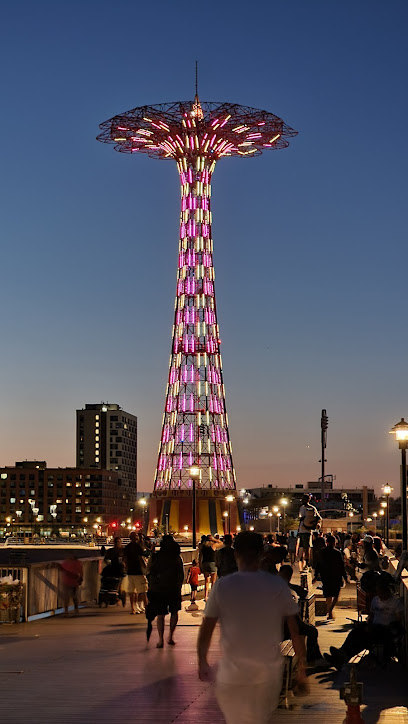
Former Parachute Jump Ride is a Historical landmark establishment in New York, New York, United States
New York
New York
United States
Sorry, no records were found. Please adjust your search criteria and try again.
Sorry, unable to load the Maps API.
Historical Landmark Services in New York, New York
Within the urban landscape of New York City, a range of professional services supports the conservation, interpretation and lawful use of designated and celebrated historic places. These services are typically requested by owners and managers of landmark properties, by institutions seeking to understand historic contexts, and by organisations planning educational programmes or public access. The aim is to balance preservation with practical utilisation, ensuring that significant sites remain integral parts of the city’s fabric for future generations.
Typically, the core offerings fall into several broad categories. Guidance on designation and status is a common starting point for property owners and developers. Experts may explain the implications of landmark status, including any required permissions for alterations, repairs or new constructions, and how such actions align with local regulations. Professionals also assist in navigating the permitting processes, ensuring compliance with the rules of local authorities responsible for historic preservation. In many cases, this involves coordination with the relevant city or state bodies to obtain approvals before work commences.
Architectural conservation and restoration are central to the work of historic landmark specialists. Practitioners assess condition, identify historically appropriate materials and methods, and propose treatment plans that respect original design while addressing modern safety and durability needs. Services may include condition surveys, archival research to verify authentic features, and the development of phased restoration programmes. For projects that require ongoing maintenance, consultants may prepare long-term preservation strategies and schedules that harmonise with budget cycles and capital renewal plans.
Interpretation and educational programming form another important strand. This encompasses the creation of informative tours, on-site explanatory signage, digital materials, and curated exhibitions that illuminate the significance of a site for diverse audiences. The focus is on accurate storytelling that reflects historical context, architectural merit and cultural value. Educational services are often designed to support schools, local communities and tourism, helping visitors gain insight into the site’s role within broader urban and national narratives.
Specialist orientated services may address the practical realities of historic properties in a modern city. Risk assessment, disaster planning and heritage-at-risk reviews are provided to mitigate threats from climate, density-related hazards and ongoing urban development. Financial and administrative advisory is another facet, with guidance on grants, tax incentives for restoration, and governance structures most suitable for museums, private owners or non-profit organisations managing heritage sites.
Practical considerations shape what customers can expect when engaging in historic landmark work in New York. Access arrangements can vary, with some sites offering interior tours, organised programmes, or controlled public access while others function primarily as external façades or representative façades within a district. Scheduling and capacity constraints are common, particularly in compact urban environments where preservation work may require temporary closures or phased activities. Insurance, safety compliance and contractor oversight are typically emphasised, ensuring work is performed to recognised standards and in accordance with preservation guidelines.
When engaging these services, clients should anticipate a collaborative process that begins with an assessment of goals and constraints. A typical engagement involves an initial review of documentation and site history, followed by recommendations for conservation, interpretation or compliant modification. The resulting plan usually outlines milestones, required approvals, potential funding options and anticipated timelines. Although exact outcomes vary by project, the overarching objective remains clear: to safeguard historical integrity while enabling responsible use and public appreciation in one of the world’s most dynamic urban settings.
- Designation guidance and permitting support
- Conservation assessment and restoration planning
- Architectural surveys and materials specification
- Interpretive programmes and educational materials
- Risk management, insurance and compliance advice