Sky Chaser is a High ropes course establishment in New York, New York, United States
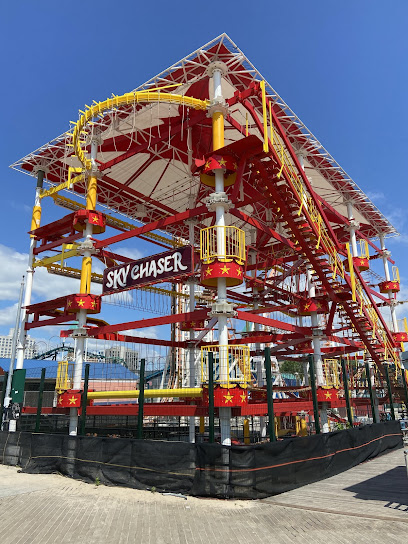
Sky Chaser is a high ropes experience located at Luna Park on the Coney Island waterfront in New York City. Marketed as an extreme thrill, it comprises a 50-foot bespoke ropes course and adventure zones that allow visitors to climb, crawl, and swing along zip-lines with views across the Boardwalk and the Atlantic Ocean. The attraction is positioned alongside Sky Tykes, offering an expanded family friendly pairing while maintaining a range of difficulty levels to accommodate different abilities.
From the outset, Sky Chaser is presented as suitable for adventure seekers of all skill levels, with four distinct difficulty levels designed to scale the challenge from beginner to expert. The course is described as being accessible to guests aged 48 inches (approximately 122 cm) and above, with a minimum height requirement of 42 inches when riding solo. This combination of inclusivity and progression is highlighted as a key feature, enabling groups with mixed experience to enjoy the experience together while each participant chooses a pace that suits them.
The on-site experience is framed as a guided, self-paced climb through an aerial obstacle course rather than a traditional ride. Guests reportedly get harnessed and secured as they navigate the ropes, zip-lines and climbing elements, with safety described in third-party accounts as reassuringly prominent. Visitors reference the senses of accomplishment and exhilaration that accompany reaching higher sections and attempting more demanding elements, occasionally accompanied by cheering crowds in shared moments of achievement.
Customer feedback from visitors points to the emotional mix of adrenaline and reassurance offered by Sky Chaser. Review snippets describe the experience as scarier than it might appear from the ground, with excitement and a sense of conquest prevailing once participants complete the course. Several reviewers note that, while it can be daunting, the harnessing and safety measures help to create a balanced environment for both thrill-seekers and more cautious guests. The social atmosphere around the attraction is frequently mentioned, with staff members noted for their kindness and supportive behaviour.
Pricing information observed in visitor comments places the per-person fare in the low to mid-£ range for access to Sky Chaser, with some reviewers indicating that passengers can spend a flexible amount of time on the course once they are up and secure. The experience is often described as a highlight of a visit to Coney Island, particularly for those seeking a high-energy, memorable activity separate from more traditional amusements nearby.
Operational details suggest that Sky Chaser is part of Luna Park’s broader range of rides, shops, and dining options, contributing to a single-visit itinerary that combines thrill with other boardwalk experiences. The attraction is highlighted as being open during Luna Park’s seasonal weekend launches and operating hours, with the first public opening noted for late March. Visitors can expect a park-wide atmosphere where multiple attractions run in concert, offering a comprehensive day out rather than a standalone stop.
Practical tips for prospective visitors include arriving prepared for outdoor conditions, as the activity unfolds along an oceanside route with variable coastal weather. Wearing comfortable athletic footwear and secure, closed-toe shoes is advisable to navigate the rope elements safely. Given the physical nature of the course, participants should be mindful of height and balance, and those with any medical concerns or mobility limitations should assess suitability in advance. While the experience is designed to be accessible to a broad audience, younger participants and those with height restrictions should verify current requirements prior to attendance.
- Location: Luna Park, Coney Island, New York, United States – with views of the Boardwalk and the Atlantic Ocean.
- Hours and seasonality: Opens during Luna Park’s seasonal schedule; first opening noted for late March (opening weekend March 28–29, 2026).
- Typical age/height requirements: Minimum height 42 inches to ride solo; Sky Chaser designed for guests 48 inches and above to enjoy.
- Experience format: Self-paced aerial obstacle course with four difficulty levels; harnessed safety and guided elements.
- Pricing cues: Reviews reference per-person pricing around the late teens to early twenties, subject to park pricing and time of visit.
- Audience take: Appeals to adrenaline enthusiasts seeking a high-thrill experience alongside broader family fun at Luna Park.
In summary, Sky Chaser offers a distinctive high ropes adventure that blends scenic coastal views with escalating physical challenge. The experience appears to deliver a balance between safe, supportive supervision and the personal accomplishment of conquering a multi-level course, making it a notable addition to the New York City thrill-seeking itinerary for locals and visitors alike.
New York
New York
United States
Sorry, no records were found. Please adjust your search criteria and try again.
Sorry, unable to load the Maps API.
High Ropes Course Services in New York, NY
High ropes course offerings in New York City and surrounding areas present a mix of outdoor adventure and structured team-building experiences. These courses are typically installed in dedicated adventure parks, school grounds, corporate venues, and some outdoor recreation centres within or near the boroughs. They are designed to deliver engaging, challenge-based activities that operate at height, with emphasis on safety, personal development, and group engagement.
Across the city, participants can expect programmes that accommodate a wide range of ages and abilities. Educational groups, scout troops, birthday celebrations, and corporate teams often use high ropes courses as a platform for confidence-building, communication, and problem solving. Sessions are commonly led by trained facilitators who guide participants through a sequence of elements, starting with introductions to equipment and safety procedures, before gradually progressing to more demanding tasks. The aim is to combine physical challenge with reflective debriefs that help individuals translate the experience into practical takeaways for everyday collaboration and resilience.
Typical services and formats include a blend of individual and group activities. Many providers offer:
- Ground-based briefing and safety demonstrations alongside harness fitting and equipment checks.
- A graduated progression through different elements, beginning with lower, easier features and moving to higher, more complex ones as confidence grows.
- Supervised ascent and element-by-element navigation, with facilitators providing coaching, prompts, and safety oversight.
- The option of facilitated group challenges that require teamwork, coordination, and collective decision-making.
- Post-activity debriefs that connect experiences on the course to workplace or school objectives, followed by reflections on personal development and group dynamics.
- Photo or summary reports of milestones to help participants recognise progress and celebrate achievement.
In practice, a typical session proceeds as follows. A safety briefing covers the rules, signals, and emergency procedures, followed by harness fitting and a safety check by trained staff. Participants then move to the course with supervision, clipping onto fixed lines and using belay systems as required. Each element is accompanied by guidance on posture, balance, and problem-solving strategies. When a higher feature is attempted, escalating levels of support may be offered, such as a guide's verbal coaching or hands-on assistance for moments of difficulty. After completing a sequence, participants return to the ground for a debrief that links the experience to practical lessons, such as leadership communication, risk assessment, and collaborative planning.
Practical considerations for high ropes courses in New York include weather and venue conditions. Outdoor experiences may be affected by rain, wind, or heat, and many sites operate seasonally or with contingency plans. Urban venues often provide shaded or enclosed waiting areas, while rural or park settings can offer more expansive landscapes and longer course layouts. Accessibility and safety standards are important considerations; some facilities provide accessible routes and modified elements to accommodate diverse participants. Public safety signs, waivers, and age or height requirements are typically standard elements, with parental or guardian signatures for younger participants.
For organisations seeking these services, selection criteria commonly focus on safety records, staff qualifications, and the ability to tailor programmes to specific objectives, whether a corporate team-building day, a school field trip, or a youth programme. While prices, durations, and exact element configurations vary by site and season, the overarching aim remains consistent: to deliver a structured, supportive environment where individuals can test limits, improve teamwork, and gain confidence within a controlled, measured framework.